


How Much Does It Cost To Build a Grocery Delivery App?
Table of Contents
Grocery Market Overview
Features That Affect Costs
Technology & Platform For Grocery App
Region-Wise Cost
Cost Breakdown by Development Phase
Third-Party Integration Costs
Maintenance & Operational Costs
Advanced Features & Cost Impacts
Strategies to Reduce Cost
ROI & Business Case Analysis
Choose Right Development Partner
Security & Compliance Considerations
Marketing & User Acquisition
Conclusion
 Add us as a preferred source on Google
Table of Content
+A Complete Guide On Grocery App Development Cost in 2026
A successful grocery delivery platform needs to be carefully planned, not just technically, but financially also. Depending on features, complexity, and development methodology, the cost of grocery delivery app development might vary greatly. Every important cost consideration for your project is broken down in this thorough guide.
Statista Says: The U.S. grocery delivery e-commerce market is expected to surpass the $455 billion mark by 2029. This clearly shows a great opportunity to build a dominant presence.
Consequently, entrepreneurs are increasingly looking for scalable digital transformation providers that offer grocery app development. To make it possible, a wise grocery app development cost planning plays a crucial role.
Market Overview and Growth Potential of Grocery Delivery Services.
The market for grocery delivery services is growing at a rate never seen before. Digital convenience for grocery shopping has permanently changed consumer behavior globally.
Current Market Statistics
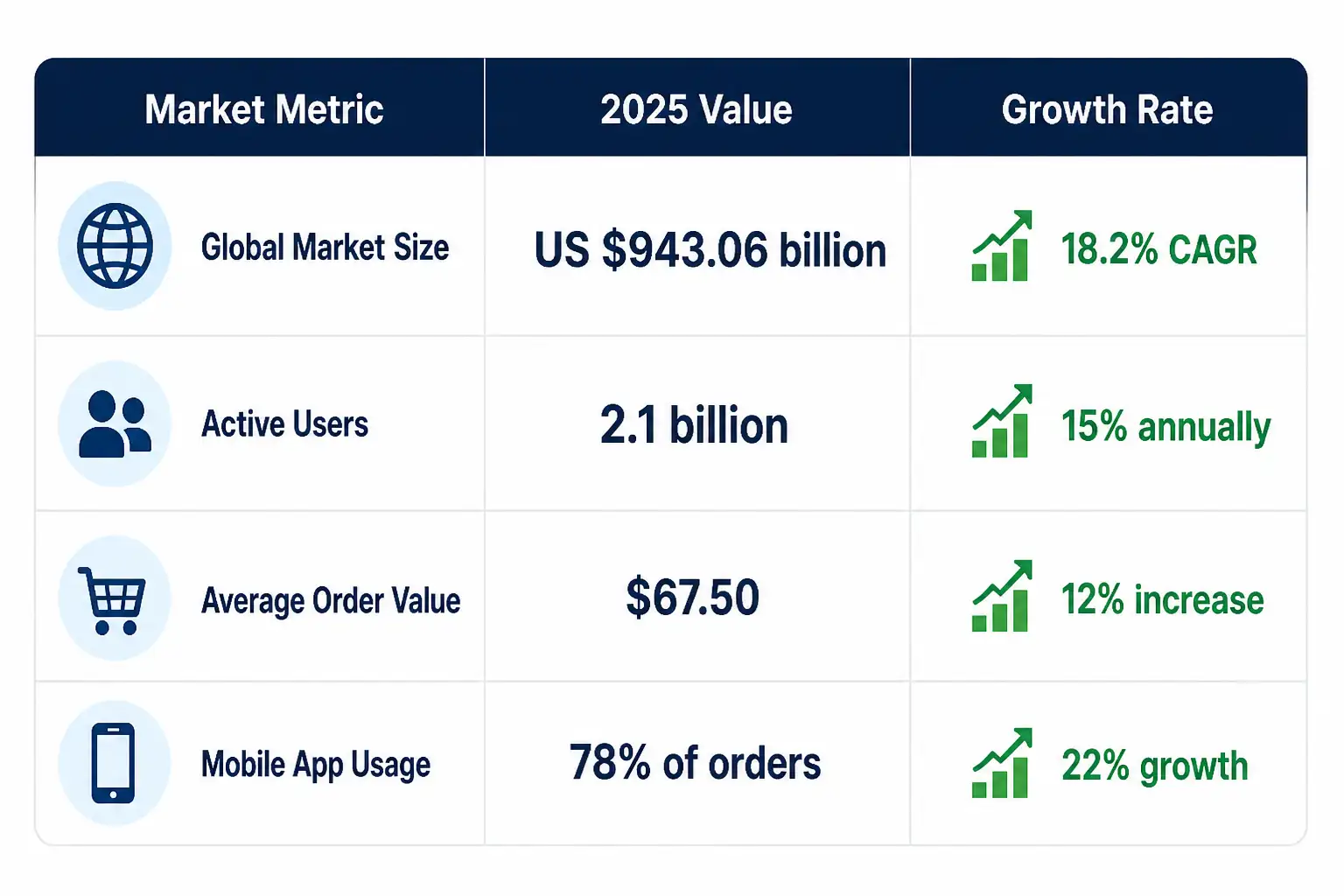
Grocery Delivery App Features That Affect Development Costs
Feature complexity directly influences your on-demand delivery app development budget. Therefore, it is essential to identify the Core features for your grocery delivery platform.
Customer-Facing Features
Fundamental Features (Necessary)
- User registration and profile management.
- Product browsing and search functionality.
- Shopping cart and wishlist options.
- Multiple payment gateway integration.
- Order tracking and notifications.
- Rating and review system.
Advanced Features (Competitive Edge)
- AI-powered product recommendations.
- Voice search capabilities.
- Augmented reality product visualization.
- Smart shopping list suggestions.
- Social sharing and referral programs.
- Multi-language and currency support.
Store Management Features
Inventory Management System.
- Real-time stock tracking.
- Automated low-stock alerts.
- Product catalog management.
- Pricing and promotion tools.
- Sales analytics dashboard.
Multi-store management capabilities
- Order Processing Tools.
- Order queue management.
- Picking and packing optimization.
- Delivery slot scheduling.
- Customer communication tools.
- Return and refund processing.
- Performance analytics.
Delivery Personnel Features
Driver Management Platform
- Driver registration and verification.
- Route optimization algorithms.
- Real-time GPS tracking.
- Earnings and performance tracking.
- Communication tools with customers.
- Delivery proof documentation.
Technology Stack and Platform Choices For Grocery App Development
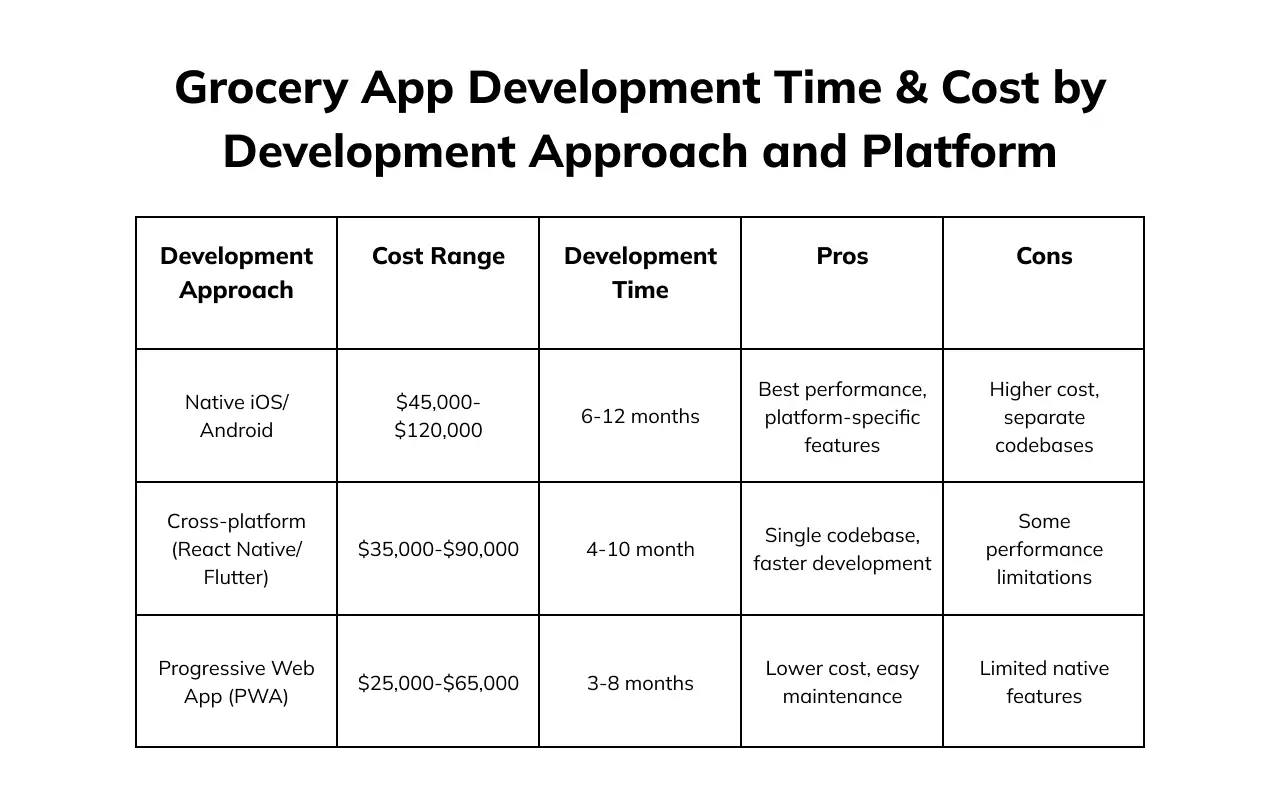
Your technology decisions significantly impact both the development timeline and cost to make a delivery app. Explore how modern grocery apps require robust, scalable architecture.
Time & Cost to Develop a Grocery App: By Approach and Platform
Backend Technology Requirements
Essential Backend Components
- Systems for user authorization and authentication.
- Database administration (MongoDB, PostgreSQL).
- Payment processing integration.
- Push notification services.
- Cloud storage solutions.
- API development and management.
- Security and encryption protocols.
Scalability Considerations
- Microservices architecture implementation.
- Load balancing and caching strategies.
- Content delivery network integration.
- Database optimization and indexing.
- Auto-scaling cloud computing systems.
- Performance monitoring tools.
Region-Wise Grocery App Development Cost Analysis For 2026
Location significantly affects your overall grocery app development cost. Different regions offer varying expertise levels and pricing structures.
North America Development Costs
United States
- Junior developers: $60-80/hour.
- Senior developers: $100-150/hour.
- Project managers: $80-120/hour.
- UI/UX designers: $70-100/hour.
- Total project cost: $80,000-$200,000.
Canada
- Development team rates: 15-20% lower than in the US.
- Total project cost: $65,000-$170,000.
- Strong expertise in fintech integration.
- Excellent English communication skills.
European Development Landscape
Western Europe (UK, Germany, Netherlands)
- Developer rates: $50-90/hour.
- Project cost range: $60,000-$160,000.
- High-quality development standards.
- Strong regulatory compliance expertise.
Eastern Europe (Poland, Ukraine, Czech Republic)
- Competitive rates: $30-60/hour.
- Project cost: $40,000-$110,000.
- Excellent technical skills.
- Growing reputation in mobile development.
Asian Development Markets
India - Leading Cost-Effective Option
- Developer rates: $15-40/hour.
- Project cost range: $25,000-$70,000.
- Large talent pool availability.
- Strong expertise in mobile app development.
- Grocery app development company India options provide excellent value.
Other Asian Markets
- Philippines: $20-35/hour.
- Vietnam: $18-30/hour.
- China: $25-45/hour.
Detailed Grocery App Development Cost Breakdown by Development Phase
Understanding phase-wise costs helps in better budget planning. Each development stage requires specific resource allocation and timeline consideration.
Planning and Discovery Phase
Requirements Analysis (2-4 weeks)
- Market research and competitor analysis: $3,000-$8,000.
- Technical feasibility study: $2,000-$5,000.
- User experience research: $4,000-$10,000.
- Project roadmap creation: $2,000-$4,000.
Design and User Experience Phase
- UI/UX Design Development (4-8 weeks)
- Wireframing and prototyping: $5,000-$12,000
- Visual design creation: $8,000-$18,000
- User interface development: $6,000-$15,000
- Design system documentation: $3,000-$7,000
Development Phase Breakdown
Frontend Development (8-16 weeks)
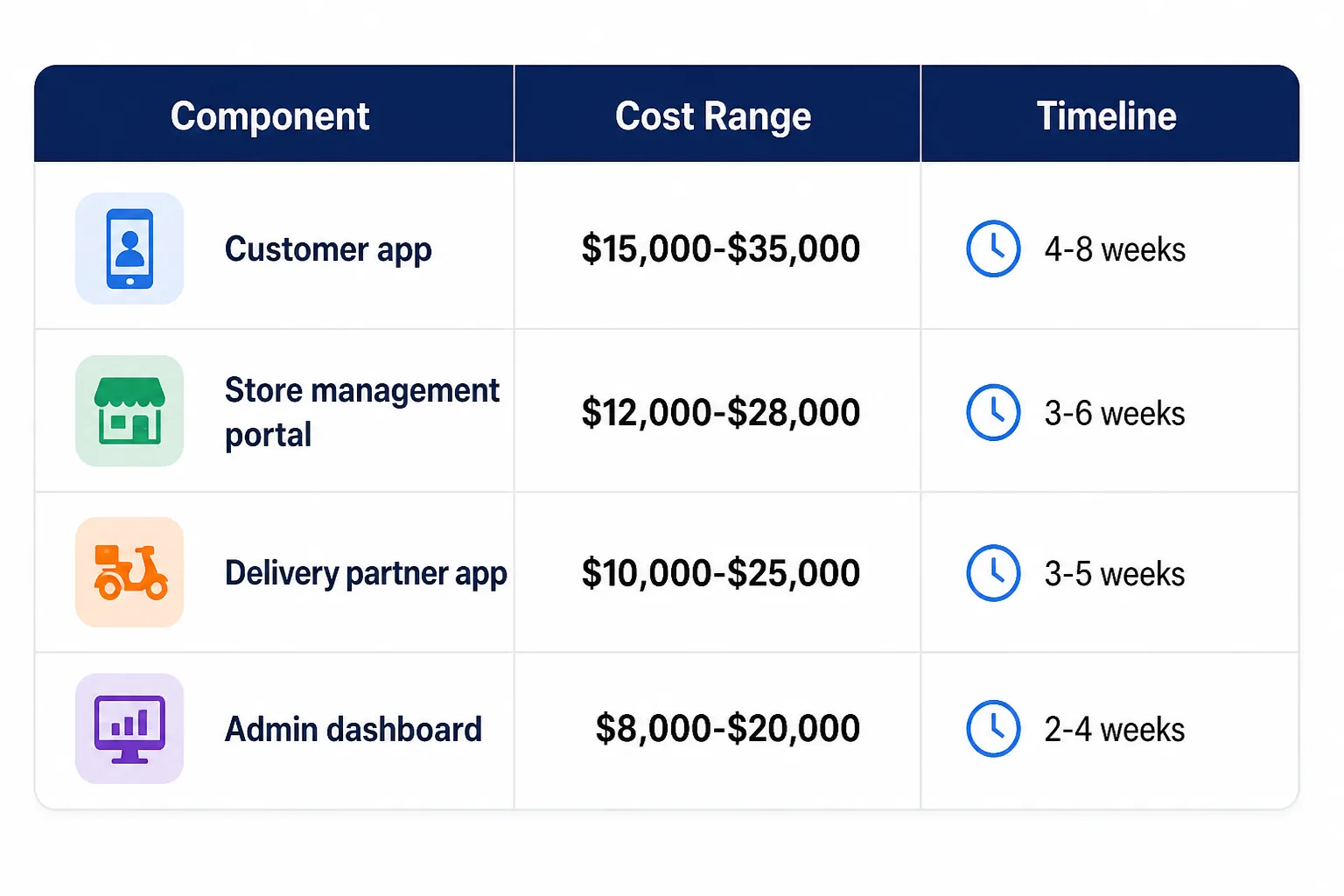
Backend Development (6-12 weeks)
- Database design and setup: $5,000-$12,000
- API development and integration: $10,000-$25,000
- Payment gateway integration: $4,000-$10,000
- Security implementation: $6,000-$15,000
Testing and Quality Assurance
- Comprehensive Testing Strategy (3-6 weeks)
- Functional testing across all platforms: $5,000-$12,000
- Performance and load testing: $3,000-$8,000
- Security penetration testing: $4,000-$10,000
- User acceptance testing: $2,000-$6,000
Third-Party Integration Costs in Grocery App
Modern grocery apps rely heavily on external services. These integrations add functionality but increase the cost of grocery delivery app development.
Payment Processing Solutions
Popular Payment Gateway Options
- Stripe: 2.9% + $0.30 per transaction
- PayPal: 2.9% + $0.30 per transaction
- Square: 2.6% + $0.10 per transaction
- Razorpay (India): 2% per transaction
- Integration development: $3,000-$8,000 per gateway
Mapping and Navigation Services
Location-Based Service Providers
- Google Maps API: $2-17 per 1,000 requests
- Mapbox: $0.50-5.00 per 1,000 requests
- Here Technologies: Custom enterprise pricing
- Integration and customization: $4,000-$12,000
Communication and Notification Services
Essential Communication Tools
- Twilio SMS service: $0.0075-$0.02 per message
- Firebase push notifications: Free up to 200M messages
- SendGrid email service: $14.95-89.95 per month
- Integration setup: $2,000-$6,000
Ongoing Maintenance and Operational Costs of Grocery Delivery App
The on-demand delivery app development is just the beginning of your investment. The Real journey begins with continuous improvement and seamless functioning for guaranteed success.
Monthly Operational Expenses
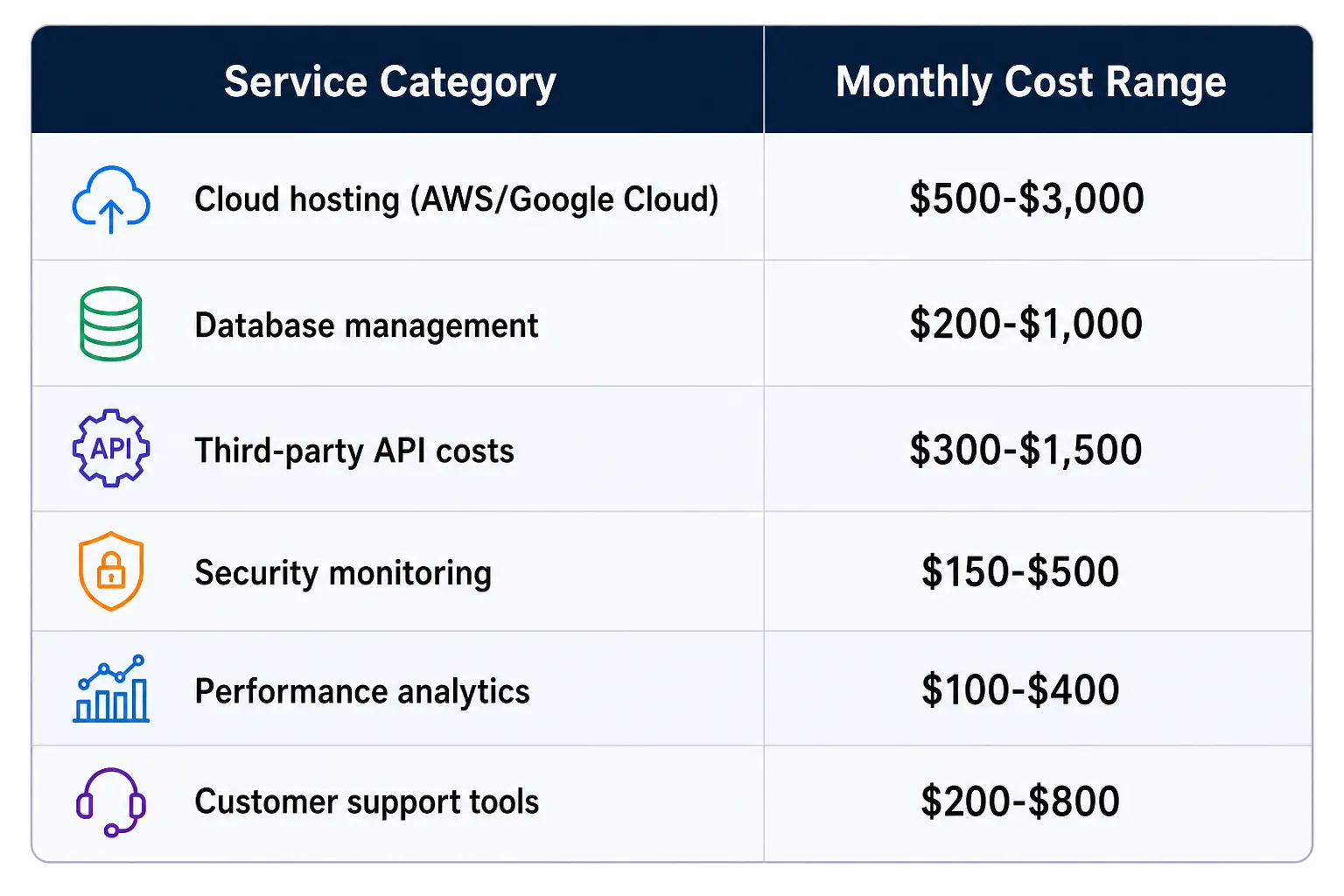
Annual Maintenance Requirements
Technical Maintenance (15-20% of development cost annually)
- Bug fixes and performance optimization
- Security updates and patches
- Operating system compatibility updates
- Third-party service integration updates
- Database maintenance and optimization
Feature Updates and Enhancements
- New feature development: Annual charges are $10,000-$30,000
- User interface improvements: Annual charges are $5,000-$15,000
- Performance optimization: Annual charges are $3,000-$10,000
Advanced Features and Their Cost Impact on Grocery Delivery App
Premium features differentiate your platform from competitors. These additions increase your cost to make a delivery app but provide significant competitive advantages.
AI-Powered Features
Machine Learning Implementation
- Personalized product recommendations: $8,000-$20,000
- Demand forecasting algorithms: $12,000-$25,000
- Dynamic pricing optimization: $10,000-$22,000
- Chatbot customer service: $6,000-$15,000
Advanced Logistics Features
Smart Delivery Optimization
- Route optimization algorithms: $15,000-$35,000
- Dynamic delivery slot management: $8,000-$18,000
- Multi-store order consolidation: $10,000-$25,000
- Predictive inventory management: $12,000-$28,000
Enhanced User Experience Features
Premium Customer Features
- Augmented reality product preview: $15,000-$30,000
- Voice ordering capabilities: $10,000-$20,000
- Social shopping and sharing: $8,000-$16,000
- Loyalty program integration: $6,000-$14,000
Strategies to Reduce Grocery App Development Cost
Effective planning lowers total development costs without sacrificing quality. Strategic decisions significantly impact your grocery app development costs.
MVP Approach Benefits
Minimum Viable Product Strategy
- Start with core features only
- Reduce initial development cost by 40-60%
- Faster time to market (3-5 months)
- Early user feedback collection
- Iterative improvement based on real data
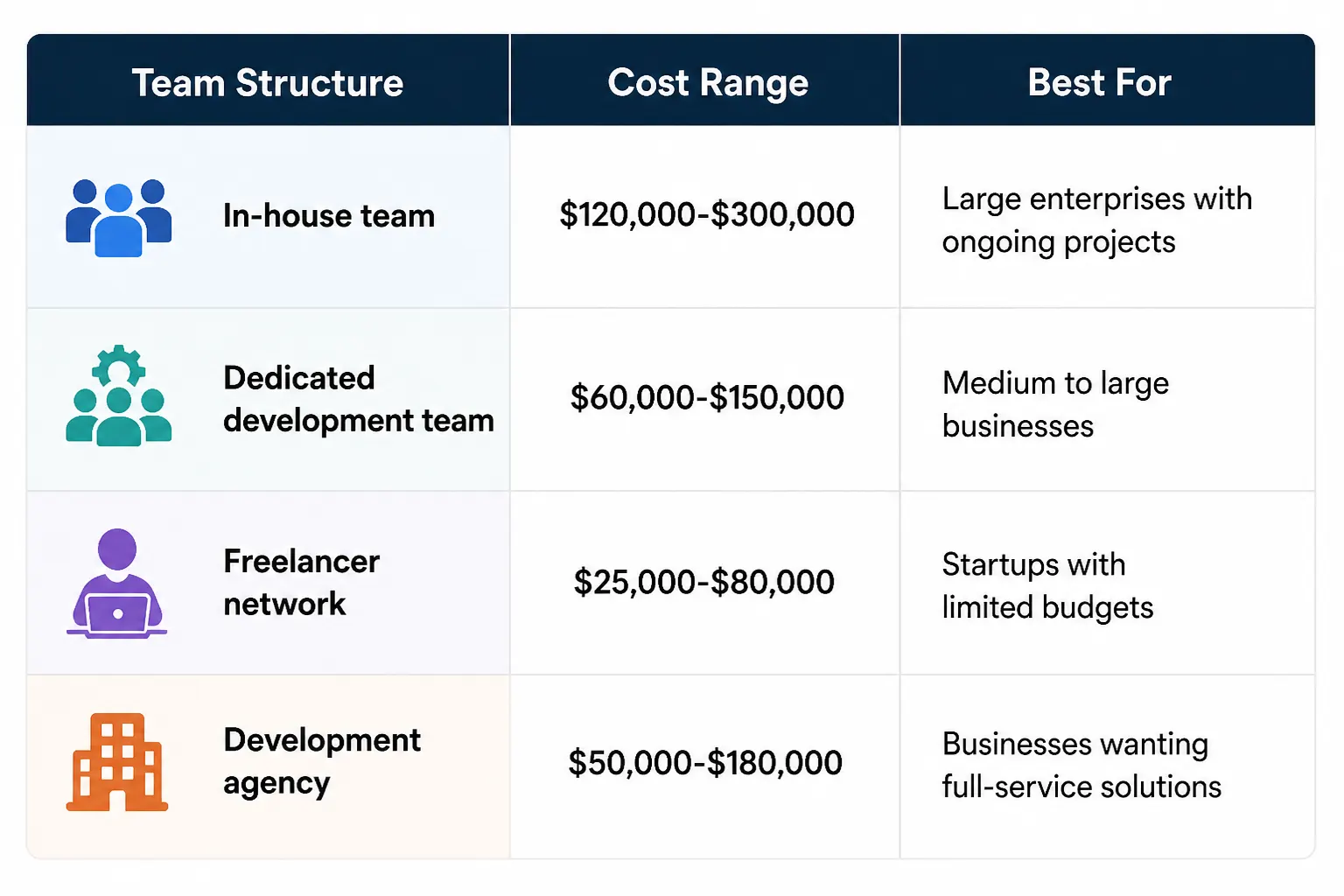
Development Team Structure Options
Team Composition Strategies
Technology Choice Impact
Cost-Effective Technology Decisions
- Cross-platform development reduces costs by 30-40%
- Open-source solutions minimize licensing fees
- Cloud-native architecture improves scalability
- An API-first approach enables faster integrations
ROI and Business Case Analysis of Grocery Delivery App
Understanding potential returns justifies your cost of grocery delivery app development investment. Realistic projections help secure stakeholder buy-in.
Revenue Projection Models
Year 1 Conservative Estimates
- Average monthly active users: 5,000-15,000
- Monthly orders per user: 2.5-4.0
- Average order value: $45-$65
- Monthly gross revenue: $562,500-$3,900,000
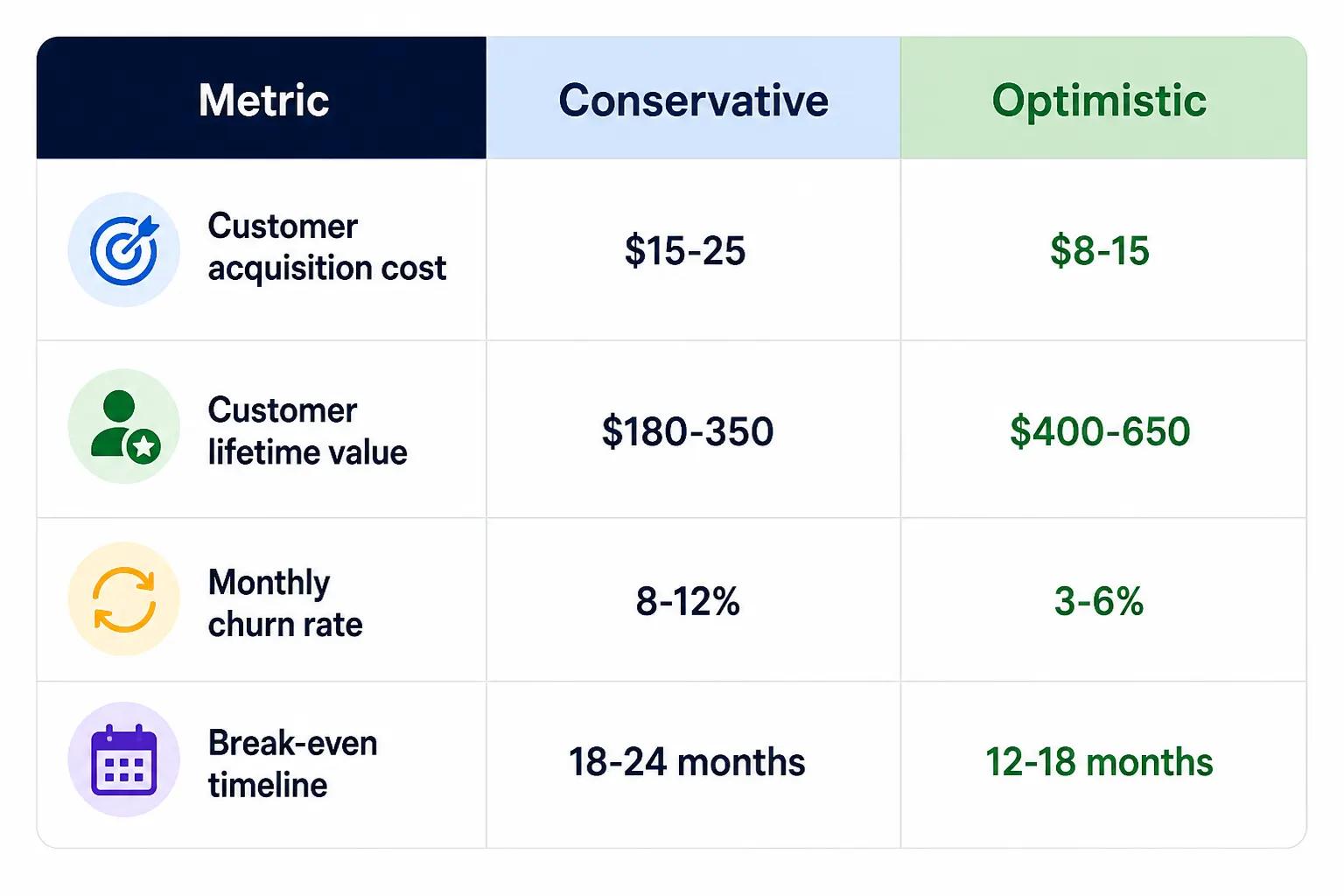
Break-Even Analysis
Key Financial Metrics
Market Penetration Strategies
Growth Acceleration Tactics
- Strategic alliances with nearby supermarkets
- Customer incentives and referral schemes
- Campaigns for targeted digital marketing
- Premium subscription service offerings
Choosing the Right Development Partner for Grocery App Development
Your development partner choice plays a crucial role in your project's success and cost efficiency. A reliable grocery app development company in India or other regions can deliver excellent results.
Evaluation Criteria
Technical Expertise Assessment
- Previous grocery app development experience
- Technology stack proficiency
- Scalability and security knowledge
- Third-party integration capabilities
- Post-launch support availability
Communication and Project Management
- Language proficiency and time zone compatibility
- Project management methodology (Agile, Scrum)
- Regular progress reporting systems
- Change request handling processes
Red Flags to Avoid
Warning Signs in Development Partners
- Unrealistic timeline promises
- Extremely low pricing without a clear explanation
- Limited portfolio or case studies
- Poor communication responsiveness
- Lack of post-launch support commitment
Due Diligence Process
Comprehensive Partner Evaluation Steps
- Request detailed project proposals with timeline breakdowns
- Interview lead developers on technical matters
- Examine case studies and client endorsements
- Check the company's certificates and credentials
- Assess ongoing support and maintenance capabilities
Contract Negotiation Best Practices
- Define a clear project scope and deliverables
- Establish milestone-based payment schedules
- Include intellectual property ownership clauses
- Indicate the requirements for testing and quality control
- Negotiate terms and conditions for post-launch support
Security and Compliance Considerations for Grocery Apps
Sensitive consumer information and financial transactions are to be handled securely by contemporary grocery delivery apps. Security implementation directly impacts your grocery app development cost but remains non-negotiable for business success.
Data Protection Requirements
Essential Security Measures
- Encrypting all user communications from beginning to end
- Payment processing compliance with PCI DSS
- GDPR compliance for European market access
- SOC 2 certification for business customers
- Frequent penetration tests and security audits
Implementation Costs
- Security architecture design: $8,000-$15,000
- SSL certificate and encryption setup: $2,000-$5,000
- Compliance audit and certification: $5,000-$12,000
- Ongoing security monitoring: $300-$800 monthly
User Privacy Protection
Privacy Framework Implementation
- User consent management systems
- Data anonymization and pseudonymization
- Right to deletion functionality
- Data portability features
- Transparent privacy policy integration
Marketing and User Acquisition Costs of Grocery Delivery Business App
Building your app is only the first step. Successful market penetration requires substantial marketing investment beyond the initial cost of grocery delivery app development.
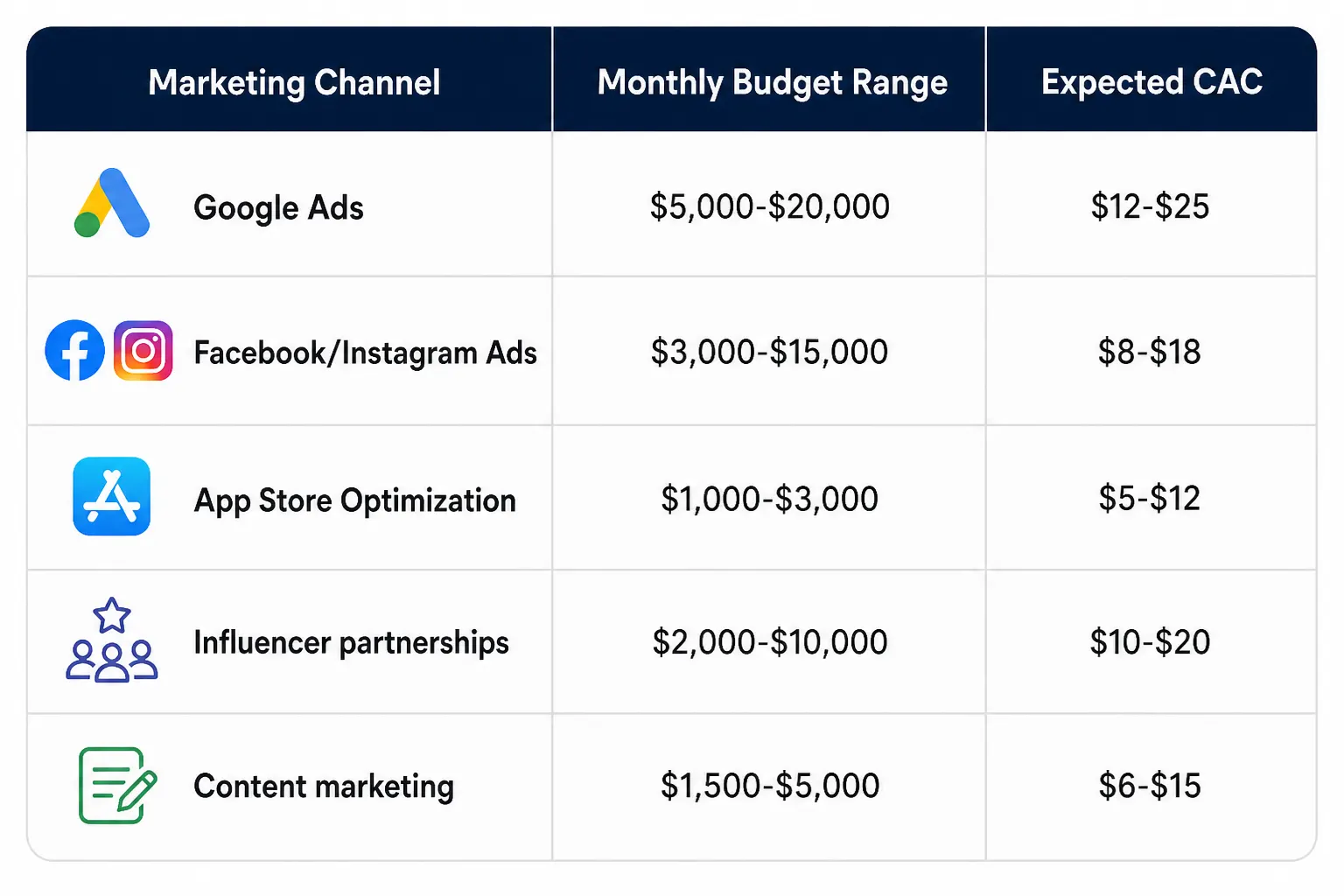
Digital Marketing Budget Allocation
Customer Acquisition Channels
Launch Strategy Considerations
Pre-Launch Marketing Activities
- Beta testing program with early adopters
- Social media presence establishment
- Strategic partnership announcements
- Press release and media outreach
- App store listing optimization
Post-Launch Growth Tactics
- Referral program implementation
- Loyalty rewards system activation
- Local community engagement initiatives
- Seasonal promotional campaigns
- Customer feedback collection and implementation
Conclusion
Every aspect, from basic functionality to Advanced AI features, must be carefully considered before estimating the grocery app development cost in 2026. Successful companies begin by developing scalable MVP strategies and spend around $25,000-$70,000 at first, and then grow according to user and market reaction. Consequently, the cost to make a grocery delivery app should align with long-term business objectives while maintaining flexibility for future enhancements and market expansion.
CodeAegis Your Strategus Grocery App Development Partner
With more than 10 years of experience, CodeAegis guarantees expert execution within financial restrictions for companies prepared to enter the profitable grocery delivery market. Their proficiency in developing apps for on-demand delivery enables companies to handle intricate technical specifications while providing safe, scalable solutions that promote long-term expansion in the cutthroat digital market.

With over 12 years of experience, Mansi Garg is the Chief Operating Officer (COO) of CodeAegis, specializing in optimizing business performance and ensuring operational maturity across the technology landscape. Known for designing scalable governance and quality assurance frameworks, she ensured on-time project delivery. Mansi is the true leader behind the successful execution of cutting-edge digital solutions for a diverse global clientele.