

What Is The Key Difference Between An On-Demand App And A Delivery App?
Table of Contents
What Do We Understand by On-Demand Applications?
What Do We Understand by Delivery Applications?
Key Differences between the On-demand apps and delivery apps?
Type of Application is required for the businesses?
Partnering With the Right Development Company
Conclusion
 Add us as a preferred source on Google
Table of Content
+Key Difference Between An On-Demand App And A Delivery App?
Nowadays, the digital presence has revolutionized business dynamics. App development is not just evolving but breaking traditional barriers and emerging as strong and progressive solutions. With robust technological advancement at a breakneck speed, the growth in this industry is flying above the sky. However, the line between on-demand and delivery apps sometimes fades away, making it difficult to identify their significant differences. If you are also facing this dilemma, don’t let it be. This blog will discuss these applications, their similarities, and what factors make them distinct.
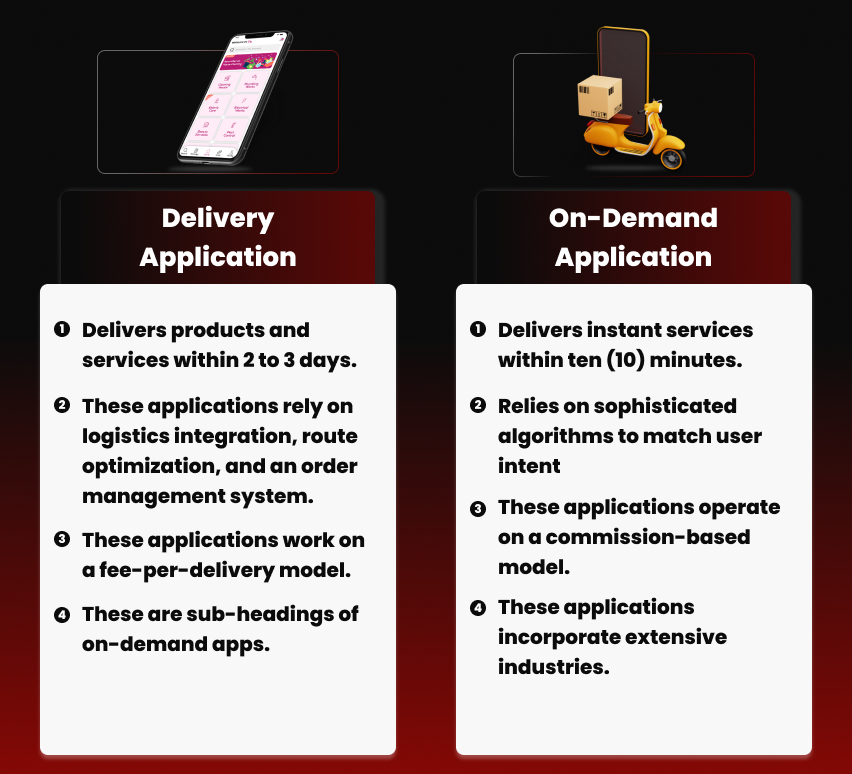
What is the main difference between these two types of applications? The answer is straightforward: On-demand applications provide quick services, typically within ten minutes to a few hours. Delivery applications usually take two or three days to deliver the product.
Another key difference is that on-demand mobile applications are designed to deliver products directly from the store to the consumer. On the other hand, delivery applications follow a more extended process that moves from the sender to a warehouse, then to a retailer, to logistics for distribution to delivery partners, and finally to the receiver.
If you’re a business owner considering investing in app development services, reconsider it and understand the market dynamics first. Two major categories are being transformed and challenging our traditional shopping methods and accessing services, making it a progressive business idea to serve consumers on a door-to-door basis.
So, let’s begin by asking some basic questions and gradually delve deeper into understanding application development services.
What Do We Understand by On-Demand Applications?
On-demand apps provide platforms that connect users with services and products instantly. They work on a pay-as-you-go model, where consumers get the product based on their immediate needs. These apps cater to various industries, including food delivery, transportation, healthcare, and home services.
Trending examples of On-Demand Apps are:
- Uber: This provides on-demand transportation services.
- Airbnb: It extensively offers on-demand accommodations.
- TaskRabbit: It connects users with freelancers for on-demand home services.
What are the Key Features of On-Demand Applications?
Excellent Communication Channels: If you’ve ordered something from an on-demand mobile application like DoorDash or others, you may wonder how fast their response to your queries will be. These advanced functionalities bridge the gap between consumers and delivery partners and instantly build trust among their customers.
Real-Time Tracking: You may wonder, but if you know where your delivery partner is and how long it may take to come to your location, it will be easier to manage your time accordingly.
Quick-Service: This is the evident key feature. If you have two applications installed, Amazon and Zepto, and you require something to gift someone instantly, I don’t think Amazon will even come to mind. That would be BlinkIt or Zepto, which serve instantly. This pushes the market value and how smartly you serve your long-term consumers.
Creative Push-Notifications: Once the on-demand application is downloaded, you will receive push notifications about their offerings, discounts, and other promotions, unconsciously forcing you to purchase from them.
What Do We Understand by Delivery Applications?
Delivery apps are integral to on-demand apps, specially crafted to facilitate the grievance-free delivery of goods within a specific time frame. These are primarily associated with retail, pharma, eCommerce, and more.
Trending examples of Delivery Apps Are:
DHL: This application provides parcel drop-off and pick-up services and allows you to track your deliveries from your smart devices.
Amazon: This e-commerce platform brings a supermarket right to your smartphone.
What are the Key Features of Delivery Applications?
Order Management: Once you have placed an order, it's completely the responsibility of the delivery partner and shopkeeper to provide your order on time and keep track of the location of the delivery partners. It keeps you aware of your product and updates you on which shop you purchased it.
Logistics Integration: Our delivery app development services integrate advanced logistics systems to bring accountability and transparency into the business. These systems optimize delivery routes, ensure timely deliveries, and help maintain high consumer satisfaction ratings.
Multiple Payment Options: These delivery options offer various payment options, including credit card, debit card, COD, and more. Numerous payment options enable audiences to pick the most suitable option and drive more traffic to your website.
24/7 Hour Availability: Delivery applications are open 24/7. You can order anytime, from anywhere. These applications have grown to an outstanding user base by serving consumer pain points and driving more traffic across countries.
What are the Key Differences between the On-demand apps and delivery apps?
We all know that both applications' functionalities are the same at many levels, but still vary. If you’re an entrepreneur expanding your business in this domain, this is a must-know guide to understanding even the most minor things about the market. These studies will make your research more profound, authentic, and helpful in the market.
Let’s focus on the takeaways of the on-demand vs. delivery apps closely.
Purpose and Industry Focused
On-demand apps: These applications are focused on providing On-demand services, incorporating extensive industries like food, healthcare, transportation, and home services. They aim to provide instant services to align their customers with the application.
Delivery Apps: These applications are a subhead of the on-demand apps. Their motto is to deliver the goods efficiently and promptly to the users.
Exceptional User-Experience
On-Demand Apps: These applications prefer to provide goods with minimal waiting time and ensure quick access to products and services.
Delivery Apps: Focus on providing a smooth and reliable delivery experience, including real-time tracking and effective communication with the delivery partner.
Technology and Infrastructure
On-Demand Apps: These applications require explicit algorithms to match users' intent with products and services in real-time. They also need scalable infrastructure and complex algorithms to handle high consumer demand.
Delivery Apps: On the other hand, these applications rely on logistic integration, route optimization, and order management systems to ensure timely and efficient product delivery.
Refreshing Business Model
On-Demand Apps: These applications run on a commission-based model, meaning the platform charges a certain fee for each transaction. Some may also charge subscription fees for advanced services.
Delivery Apps: These operate on a fee-per-delivery model, with additional charges for expedited delivery or special handling.
Which Type of Application is required for the businesses?
Brainstorming your ideas is a mandatory step before making any remarkable decisions. However, choosing between developing on-demand and delivery apps depends on your business goals, targeted audiences, and the industry in which you belong. Below is a comprehensive explanation of the most preferable option for you.
Business Goals
Before delving deep into application development services, provide a clear roadmap, such as what your business is supposed to project, considering the industry. For instance, transportation, healthcare, or home services are more suitable for on-demand apps, covering a wide range of audiences and making informed decisions. On the other hand, if your business is more concerned with delivering food, groceries, and retail products, then a delivery app would be the more appropriate choice.
Target Audiences
Before building a full-fledged application, try launching an MVP in the market to understand the market's traction and competitiveness, and how your application can survive there and make multiple levels of profits. Also, understand the needs of your targeted audiences, whether they require an on-demand app or immediate services to meet their exceptional requirements. If the majority of the audience votes for convenience and timely delivery of products, they are served what has been asked for in the market.
Industry Trends
Keeping industry trends in mind is as important as the rhythm of the song, as it helps to engage consumers and keep them loyal to you. For instance, the retail industry has significantly shifted towards delivery apps, making them lucrative business opportunities. Conversely, food industries rely on on-demand app development services to facilitate their operations in the market. Therefore, studying these trends makes sense before entering the market thoroughly.
Partnering With the Right Development Company
When you develop a specific app, whether on-demand or delivery, partnering with the right development company becomes necessary. A reputable on-demand app development company will help you navigate the complexities and challenges of developing an extensive application. These companies ensure that your app meets industry standards and user expectations.
CodeAegis is an on-demand and delivery app development company with skilled developers and designers who work closely to meet the end goals and create a robust, user-friendly, responsive app that aligns with your business goals.
So, if you’re here to build a comprehensive on-demand service platform, you’re knocking at the right door. We have got the expertise to give your vision lucrative wings.
Conclusion
In a nutshell, on-demand mobile and delivery apps are essential tools in this digital era, serving highly competitive demands with unique purposes. However, by understanding the difference between these different types of applications, their USPs, and their ability to cater to different user needs, it becomes easier to resolve real-world problems.
Based on your business requirements, whoever you choose, in both cases, you must partner with a reliable app development company like CodeAegis that ensures your app’s success in the global competitive market.

Sakshi Aggarwal is the Co-CEO of CodeAegis, a visionary leader with 12+ years of experience in transforming complex business requirements into high-impact technology solutions across industries. Her core contribution lies in architecting the company's customer-centric service delivery model and optimizing cross-functional execution. She has become a driving force for ensuring project success and cultivating a culture of accountability across the software development life cycle.